Illegal Lubricant Market
Illegal lubricant market – The Instituto Combustível Legal (ICL) has signed a Technical Cooperation Agreement with Lwart Soluções Ambientais and the Instituto Jogue Limpo to strengthen the recovery of used or contaminated lubricating oil (OLUC) and ensure the environmentally sound disposal of non-compliant products seized during enforcement actions.
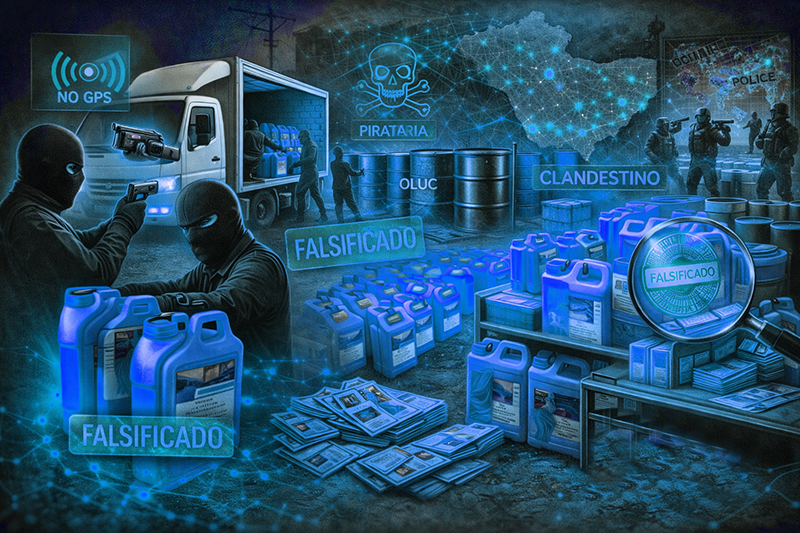
The initiative expands the country’s re-refining and reverse logistics capacity and directly addresses one of the main drivers of the illegal lubricant market: cargo thefts and robberies that fuel piracy and counterfeiting schemes.
In 2025, Brazil recorded the legal recovery of more than 600,000 liters of OLUC, a volume that highlights both the scale of the formal re-refining market and the importance of preventing contaminated oils and illicit products from re-entering the consumption chain.
The partnership enables a structured technical process to ensure that seized lubricants are handled with environmental safety, eliminating contamination risks and reducing the recurrence of fraud.
Cargo Theft
ICL data shows that the theft of lubricant cargo is a central link in the criminal chain, allowing for the diversion of original products that end up being repackaged, adulterated, or sold under counterfeit brands.
Between 2022 and 2025, incidents were concentrated primarily in the state of Rio de Janeiro, which accounted for approximately 86% of reports, followed by São Paulo and Minas Gerais. The Baixada Fluminense region and the Duque de Caxias–Avenida Brasil–Washington Luiz Highway corridor are the main hotspots, particularly in the vicinity of manufacturing plants and distribution centers, according to heat maps and statistics compiled by the SIPES system, maintained in partnership with the private sector.
The Institute’s data details the modus operandi of these organizations: shipments are intercepted with the support of criminal escort vehicles, and in more than 50% of cases, signal jammers are used to neutralize tracking and communication. The products are then sent to clandestine warehouses, where they are mixed with low-quality oils, and packaging, labels, and seals are counterfeited, followed by distribution in the illegal market. Recent police operations—such as Operation Torniquete—have resulted in the closure of clandestine factories and the seizure of counterfeit products from well-known brands, with intelligence support and information provided by the ICL.
In addition to the environmental and economic impact, the survey indicates that integrated action between the private sector, civil entities, and security forces is already yielding results. In areas under the jurisdiction of the 22nd Military Police Battalion, for example, there were no reports of cargo theft between January and May 2025, following the intensification of coordinated actions and the sharing of intelligence information.