Lubricants for hybrid cars
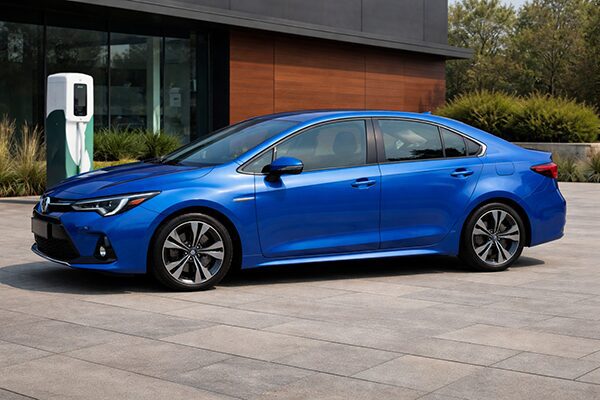
Lubricants for hybrid and electric cars – Although they still represent a small part of the national fleet, the volume of hybrid and electric cars has been growing rapidly in Brazil, and this advance has become one of the drivers of technological changes in the automotive lubricants segment.
A recent survey by NeoCharge, based on data from the National Traffic Secretariat, shows that between December 2024 and June 2025, the fleet of electrified vehicles in Brazil, including electric, plug-in hybrid, and conventional hybrid vehicles, jumped from around 374,000 to over 481,000 units, a 28% increase in just six months.
According to the study “Initiatives and Structural Challenges to Boost Low-Carbon Mobility in Brazil by 2040,” published by the MBCBrasil Institute, the fleet of vehicles in Brazil will be 44 times more electrified in 2040, with hybrid models representing 72% of the total in this scenario. Electric vehicles, on the other hand, are expected to reach 17.4 million units, representing more than 27.6% of all cars.
These data reveal that electrification will not be a phenomenon restricted to the niche of pure electric vehicles, but that hybrids, which combine electric and combustion engines, will also have a significant share in the Brazilian automotive matrix.
Charging infrastructure for hybrid and electric cars
Despite the growth of this fleet, the public charging infrastructure is still insufficient to support this expansion. According to data from the Brazilian Electric Vehicle Association (ABVE), the light electric vehicle market in Brazil closed 2025 with 223,912 units sold, setting a new annual record in the association’s historical series and a 26% growth over 2024 figures.
Also according to ABVE, Brazil currently has about 16,880 charging points, which represents approximately one charging station for every 18 electrified vehicles. São Paulo remains the largest market for this type of car, accounting for 30.9% of the fleet circulating in Brazil, or about 93,500 vehicles. Meanwhile, the state’s infrastructure totals 4,678 charging points, which leads to an approximate ratio of 20 cars per charging station.
This contradiction between the pace of fleet growth and the availability of charging stations may create bottlenecks in the full adoption of fully electric vehicles in the country, shifting part of the demand to hybrid models, which continue to use combustion systems in conjunction with electric propulsion.
The role of lubricants in the transition
Contrary to the common perception that electrification would drastically reduce the use of lubricants, the reality is more complex, as hybrid vehicles still rely on combustion engines in various operating cycles. In these cases, proper lubrication with approved and recommended products is essential for protecting metal components, especially in situations where the engine is intermittently activated, such as constant starts and stops.
In addition to traditional engine lubrication, the technological evolution of hybrid and electric cars requires fluids with special characteristics, with greater fluidity for rapid protective film formation, oxidation resistance, and compatibility with electronic materials and sensitive components. In fully electric vehicles, lubricants also perform critical functions in single-speed gear transmissions, acting as a thermal fluid for heat management in batteries and mechanical systems.
Another aspect that has gained importance in electric and hybrid vehicles is acoustic comfort, considering that in vehicles with predominantly electric propulsion, noise reduction is a significant part of the user experience. Lubricants with formulations that contribute to reducing noise, vibration, and harshness, technical metrics known as NVH (Noise, Vibration, and Harshness), become a relevant differential in the overall performance of vehicles.
Global trends and local adaptation
The global lubricant industry is already moving towards formulations with lower viscosity and greater fluidity, in line with the requirements of hybrid engines and more complex electromechanical systems. This trend is spreading to more mature markets, such as Europe and Japan, and should gradually influence the Brazilian market as the electrified fleet increases and technical requirements evolve.
The energy transition in the automotive sector does not eliminate the need for lubricants, but it contributes to redefining the scope of applications for this type of product and requires increasingly sophisticated solutions that are aligned with new mobility demands. Innovation, technology, and a deep understanding of these new requirements will be essential to keep pace with this evolution and ensure that cars, whether hybrid or electric, continue to operate efficiently, reliably, and durably.