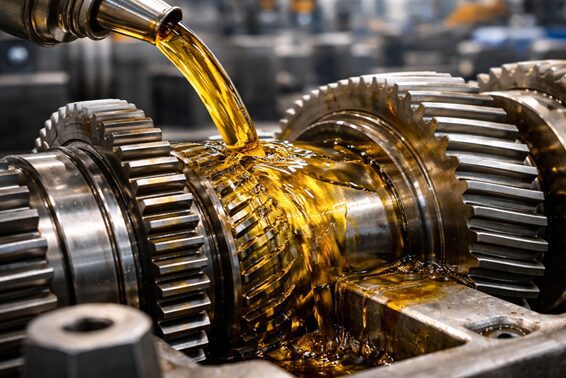
 Industrial lubrication
Lubricants are fundamental components for the development of the industrial sector, as they ensure the efficiency, safety, and operational longevity of machinery and equipment and perform multiple functions that directly impact the productivity and economy of industries. In this sense, considering the current market situation, it is possible to highlight three main trends for industrial lubrication in 2026: precision lubrication, smart monitoring, and premium products.
The scenario for these pillars to be the protagonists throughout the year is marked by competitiveness, lack of time for preventive maintenance, a shortage of skilled labor, as well as stagnant production caused by reduced investment and volume in domestic industries.
Even with the advancement of programs such as Nova Indústria Brasil, which has contributed to the growth of industrial GDP in recent years (projected to increase by 1.1% by 2026, according to the National Confederation of Industry), factors such as the Selic rate and export tariff policies have affected the performance of the segment as a whole. However, 2026 is expected to bring better results for the market compared to the previous year, which will also be reflected in industrial lubrication.
Trends for industrial lubrication in 2026
The first of the pillars that will guide this sector throughout the year is precision lubrication. Through the controlled application of the product, it is possible to reduce waste and extend the useful life of industrial assets, which contributes to the efficiency of the activity as a whole, especially in relation to more sustainable costs and processes.
Implementing this process effectively in industries requires the adoption of good practices, such as adequate training of staff, so that professionals are familiar with the products and techniques involved in precision lubrication, the choice of the right lubricants, meeting manufacturers’ specifications, and regular maintenance to ensure the systems function properly.
The second trend for 2026 concerns smart monitoring, based on the integration of sensors and Artificial Intelligence into the predictive maintenance process. Optimizing lubricant consumption is the main direct consequence of this practice, which is positive from a cost and resource management perspective.
Finally, premium products will also mark the year of industrial lubrication. Because they offer superior quality and performance, in addition to generating additional benefits over conventional lubricants, they provide fewer changes, less waste, and greater operational efficiency, also contributing to cost control and sustainability commitments.
Which segments will benefit the most?
These trends will have a more significant impact on industries such as automotive, which always has high demand for lubricants even in periods when part of the companies’ capacity is idle, as well as food, aerospace, and agribusiness.
In these segments, proper industrial lubrication promotes competitive advantages such as reduced friction and wear on parts and equipment, temperature control, protection against corrosion and oxidation, system cleaning, component sealing, compression efficiency, and leak prevention.
Commitment to sustainability
Thus, the work of research and development teams at lubricant manufacturers is also essential for producing solutions that ensure better performance, thereby reducing consumption and contributing to a sustainable future.
Technological innovations focused on sustainability, such as synthetic and biodegradable products, as well as training on proper handling and disposal throughout the product life cycle, are some examples of the synergy between the ESG agenda and the lubrication market.
The development of Brazilian industries depends directly on the ability of machines to operate continuously and efficiently, a goal that can only be achieved with a proper industrial lubrication plan and the use of quality lubricants specific to each application.
The three main trends for industrial lubrication in 2026 are important to guide companies in the sector to maximize the results of their activities, based on factors such as increased equipment and component life, guaranteed reliability and operational safety, reduced need for corrective maintenance and associated costs, prevention of unplanned production downtime, and improved energy efficiency.
By Renato Galvão (commercial director of Fuchs)